



Digital Skills You Must Master to Succeed in the Modern Workforce
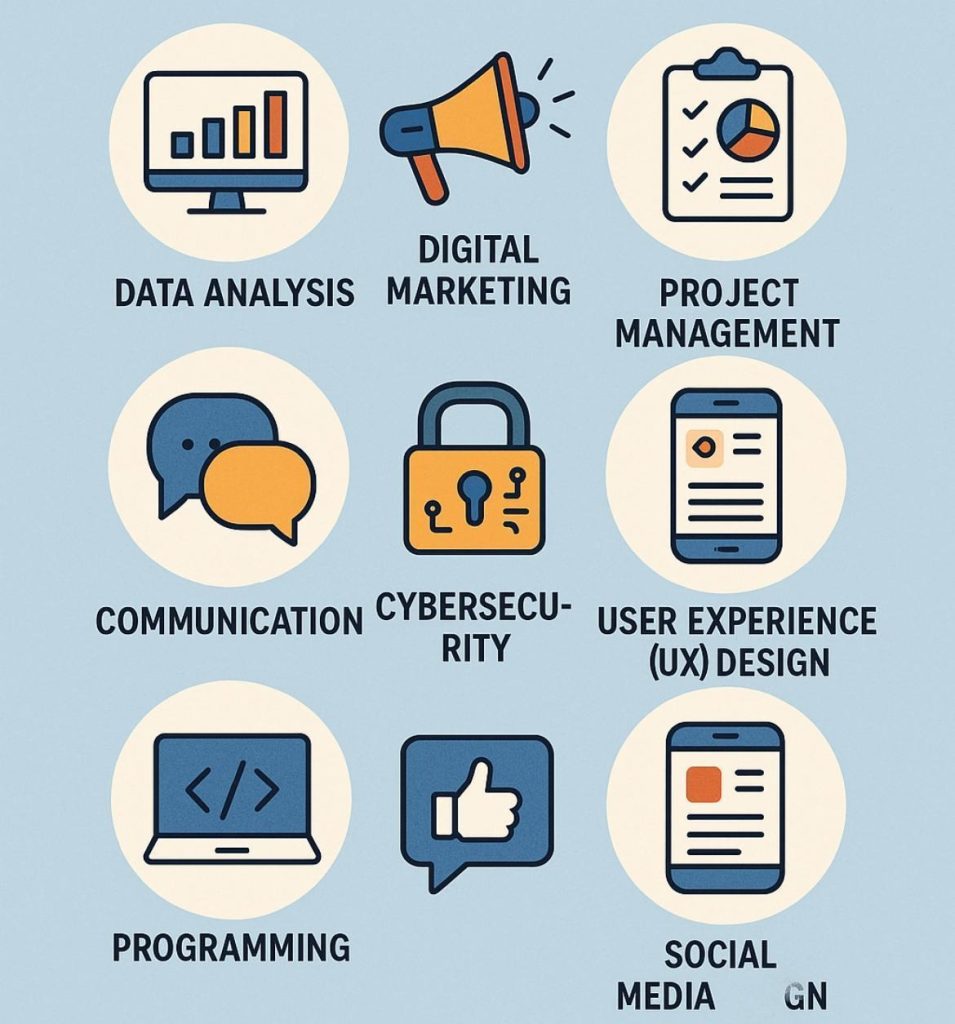
Introduction: The Digital Imperative in Today’s Job Market

The workforce is evolving at an unprecedented pace, driven by rapid technological advancements. The job market is changing faster than ever, and technology is leading the charge. According to Brookings, a massive 85% of jobs created since 2010 need digital skills. IDC even reports that global spending on digital transformation hit $1.8 trillion in 2022. Clearly, the digital wave isn’t slowing down anytime soon. This acceleration means digital literacy has transitioned from being No matter if you’re in tech, marketing, finance, or healthcare digital literacy isn’t a nice-to-have anymore. It’s your entry ticket to stay relevant. advantageous to absolutely critical for career survival across all sectors.
Professionals who fail to adapt risk being left behind as industries undergo massive digital disruption. If you’ve ever wondered which digital skills actually matter for your career, you’re in the right place This article explores the most in-demand digital skills, why they matter, and how you can systematically develop them to future-proof your career in this new technological landscape.
Data Literacy & Analytics
Why It Matters
Data has become the lifeblood of modern business operations. Companies like Netflix attribute 80% of their content consumption to data-driven recommendation algorithms, while Amazon makes 2.5 million daily pricing adjustments based on real-time analytics. Professionals who can interpret and leverage data don’t just have an advantage—they’re becoming indispensable.
Key Competencies to Develop
- Basic Data Analysis: Beyond spreadsheets, learn to clean and validate data—a task that consumes 60% of analysts’ time according to IBM research
- Statistical Knowledge: Understanding normal distributions and correlation coefficients can prevent costly misinterpretations
- Advanced Analytics: SQL remains the most requested skill in data job postings, with Python (Pandas) following closely
Learning Pathway
- Master Excel’s Power Query for efficient data transformation before moving to Power BI
- Practice with real datasets from platforms like Kaggle or Google Dataset Search
- Build portfolio projects showing complete analysis workflows from cleaning to visualization
Common Pitfalls to Avoid
Many beginners fall into the trap of analysis paralysis—spending excessive time exploring data without producing actionable insights. Others create misleading visualizations by choosing inappropriate chart types or scales. The most successful analysts balance technical skills with business acumen to tell compelling data stories.
Artificial Intelligence & Machine Learning Fundamentals
Why It Matters
AI is transforming industries at breakneck speed. In healthcare, AI diagnostics reduce radiology errors by 30% according to Nature Medicine. Financial institutions now detect 90% of fraud using machine learning models. Even creative fields are being revolutionized—40% of developers now use AI pair programmers like GitHub Copilot.
Key Competencies to Develop
- AI Concepts: Understand the limitations of current AI alongside its capabilities
- AI Tools: Beyond ChatGPT, explore specialized tools like Runway ML for video generation
- Prompt Engineering: Learn techniques like chain-of-thought prompting for better results
Learning Pathway
- Start with Google’s free AI Fundamentals course for conceptual grounding
- Experiment with no-code platforms to understand AI workflows
- Progress to customizing pre-trained models before attempting full builds
Emerging Applications
The most exciting developments are happening at the intersection of AI and specific domains. In marketing, generative AI creates personalized content at scale. Manufacturers use computer vision for quality control, while agricultural firms employ satellite imagery analysis for crop monitoring. Identifying where AI impacts your industry creates career opportunities.
Cloud Computing & DevOps

Why It Matters
The cloud computing market continues its explosive growth, with Flexera reporting 94% enterprise adoption in 2023. AWS leads with 33% market share, followed by Azure (22%) and Google Cloud (11%). Professionals who understand cloud economics—like comparing the $0.02/hr cost of basic compute instances across providers—become invaluable in cost-conscious organizations.
Key Competencies to Develop
- Cloud Platforms: Learn to architect solutions following the Well-Architected Framework
- DevOps Basics: Continuous integration/delivery pipelines reduce deployment risks by 75%
- Cloud Security: Master identity/access management and encryption best practices
Learning Pathway
- Use free tiers to deploy simple applications across multiple providers
- Automate infrastructure using Terraform before manual configuration
- Earn foundational certifications, then specialize based on career goals
Cost Optimization Strategies
Right-sizing resources and implementing auto-scaling can reduce cloud spend by 30-40%. Tools like AWS Cost Explorer and Azure Cost Management provide visibility, while reserved instances offer significant discounts for predictable workloads. These financial considerations are now core cloud competencies.
Digital Marketing & SEO

Why It Matters
The digital advertising market will reach $786 billion by 2026 (Statista), with email marketing delivering an astonishing $36 ROI per $1 spent (DMA). Companies desperately need professionals who can navigate this complex landscape where a single algorithm change can make or break campaigns.
Key Competencies to Develo
- SEO & Content Marketing: Master technical SEO alongside quality content creation
- Social Media Strategy: Platform-specific best practices outperform generic approaches
- PPC & Analytics: Learn to attribute conversions across multiple touchpoints
Learning Pathway
- Implement SEO changes on a personal website or blog to see direct impact
- Get certified in Google Analytics 4 before its full rollout
- Manage real ad campaigns, even with minimal budgets, for practical experience
Performance Benchmarks
Top industries achieve 4-5% click-through rates on search ads. Video content boosts conversions by 86% (HubSpot), while personalized email subject lines increase open rates by 26%. Understanding these metrics separates professionals from amateurs.
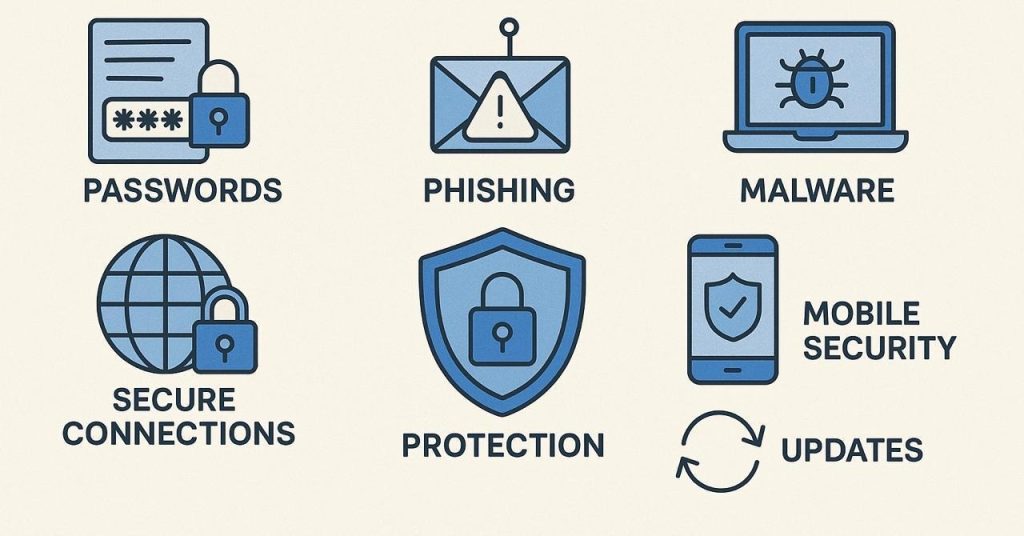
Cybersecurity Awareness
Why It Matters
With ransomware attacks occurring every 11 seconds (Cybersecurity Ventures) and the average breach costing $4.45 million (IBM), security knowledge is no longer confined to IT departments. Every employee represents a potential vulnerability—or defense—in an organization’s security posture.
Key Competencies to Develop
- Basic Security Hygiene: Implement password managers and 2FA everywhere
- Network Security: Recognize VPN vulnerabilities and zero-trust alternatives
- Compliance Standards: GDPR fines can reach 4% of global revenue
Learning Pathway
- Start with free courses from Cybrary on threat recognition
- Participate in capture-the-flag events on TryHackMe
- Progress to certifications aligned with your career path
Certification Landscape
CompTIA Security+ provides excellent fundamentals, while CISSP holders command $120,000 average salaries. Ethical hacking certifications like CEH are valuable but require ongoing practice to maintain skills. Choose based on your desired specialization.
UI/UX Design & Product Management
Why It Matters
Airbnb increased revenue by 30% after refining their booking flow—proof that superior UX directly impacts the bottom line. With 88% of online consumers less likely to return after a bad experience (Amazon Web Services), design quality has become a competitive differentiator.
Key Competencies to Develop
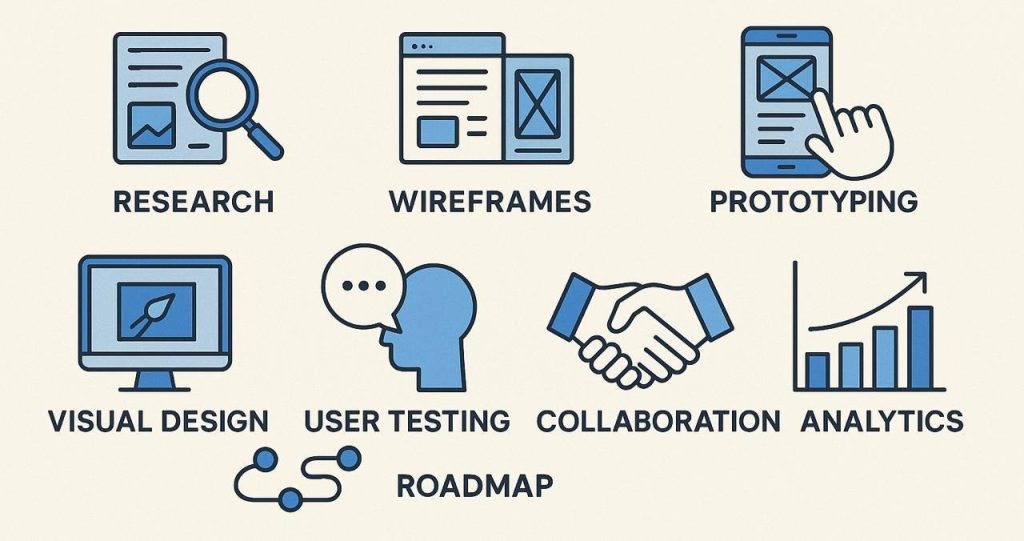
- Wireframing & Prototyping: Balance speed and fidelity based on project phase
- User Research: Remote testing tools have made feedback more accessible
- Agile & Scrum: Understand how design integrates with development sprints
Learning Pathway
- Redesign existing products to build your problem-solving skills
- Create case studies documenting your design process end-to-end
- Learn to collaborate with developers using version-controlled design systems
Measuring Success
Beyond aesthetics, track metrics like task completion rates, error frequency, and System Usability Scale (SUS) scores. Quantitative data combined with qualitative insights creates compelling justification for design decisions.
Conclusion
The digital revolution has permanently altered the career landscape. As we’ve seen, professionals who master data analytics can uncover insights driving billion-dollar decisions. AI specialists are reshaping entire industries, while cloud architects build the infrastructure powering modern enterprises. Digital marketers connect products with global audiences, cybersecurity experts defend against evolving threats, and UX designers craft experiences that customers love.
What unites these digital skills is their compounding value—each new competency makes you exponentially more valuable in the marketplace. The learning path may seem daunting, but remember: every expert was once a beginner. Start with one skill that aligns with your interests, build practical projects to reinforce your knowledge, and progressively expand your capabilities.