


The Future of Industries: How Artificial Intelligence Drives Digital Transformation

Artificial Intelligence (AI) is no longer just a buzzword from sci-fi movies—it’s here, reshaping industries, redefining efficiency, and pushing innovation to new heights. From healthcare diagnostics to automated manufacturing, AI-powered solutions are revolutionizing business operations, customer experiences, and decision-making processes.
Every company today, from startups to global enterprises, is racing to harness AI’s power—or risk being left behind. This article explores
✔ How AI is transforming key sectors—healthcare, manufacturing, finance, retail, and education.
✔ Real-world case studies of AI implementation.
✔ Challenges and opportunities in AI adoption for digital transformation.
By understanding AI’s impact, businesses and policymakers can better prepare for an AI-driven future.
1. AI in Healthcare: Precision Medicine and Predictive Care

Current Applications
AI is enhancing medical diagnostics, drug discovery, and patient care through:
- Medical Imaging Analysis: AI algorithms (e.g., Google’s DeepMind) detect tumors, fractures, and diseases from X-rays and MRIs with higher accuracy than human radiologists.
- Predictive Analytics: Hospitals use AI to predict patient deterioration, reducing ICU readmissions (e.g., Johns Hopkins’ AI sepsis detection tool).
- Personalized Treatment: IBM Watson analyzes patient data to recommend tailored cancer therapies.
Case Study: Indonesia’s AI-Powered Telemedicine
Startups like Alodokter and Halodoc integrate AI chatbots for symptom checks, reducing pressure on healthcare facilities.
Challenges & Opportunities
❌ Data Privacy Concerns: Patient data security must be prioritized.
✅ AI for Rural Healthcare: AI can bridge gaps in underserved regions via telemedicine.
2. AI in Manufacturing: Smart Factories and Automation
Current Applications
- Predictive Maintenance: Siemens uses AI to predict machinery failures, reducing downtime.
- Quality Control: Computer vision systems (e.g., NVIDIA’s Metropolis) inspect products for defects in real time.
- Supply Chain Optimization: AI forecasts demand fluctuations, improving inventory management.
Case Study: Tesla’s AI-Driven Production
Tesla’s factories leverage AI-powered robots for precision assembly, cutting production time by 30%.
Challenges & Opportunities
❌ High Implementation Costs: SMEs need affordable AI solutions.
✅ Reskilling Workforce: Upskilling employees to work alongside AI is critical.
3. AI in Finance: Fraud Detection and Hyper-Personalization
Current Applications
- Fraud Prevention: Mastercard’s AI doesn’t just catch fraud—it spots suspicious activity in milliseconds, long before human analysts could react.
- Algorithmic Trading: Hedge funds use AI (e.g., QuantConnect) to analyze market trends.
- Chatbot Advisors: Bank Mandiri’s virtual assistant handles customer inquiries 24/7.
Case Study: Jago Bank’s AI-Powered Banking
Indonesia’s Jago Bank uses AI for risk assessment and personalized financial tips. It’s a glimpse into the future of banking—where decisions are instant, personalized, and powered entirely by intelligent systems.
Challenges & Opportunities
❌ Regulatory Compliance: AI must align with financial regulations.
✅ Financial Inclusion: AI enables credit scoring for unbanked populations.
4. AI in Retail: Enhancing Customer Experience

Current Applications
- Recommendation Engines: Amazon’s AI suggests products based on browsing history.
- Cashierless Stores: Alibaba’s Hema stores use AI for scan-and-go payments.
- Inventory Management: Walmart optimizes stock levels using AI demand forecasting.
Case Study: Tokopedia’s AI Chatbot
Tokopedia’s TokoBot handles millions of customer queries, improving response times.
Challenges & Opportunities
❌ Consumer Trust: Transparency in AI decision-making is essential.
✅ Hyper-Personalization: AI-driven marketing boosts sales conversions.
5. AI in Education: Adaptive Learning and Automation
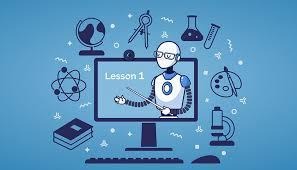
Current Applications
- Personalized Learning: Duolingo’s AI tailors language lessons to individual progress.
- Automated Grading: Turnitin’s AI checks plagiarism and provides feedback.
- Virtual Tutors: Ruangguru’s AI assists students in solving math problems.
Case Study: Zenius’ AI Tutor
Zenius uses AI to analyze student performance and recommend study materials.
Challenges & Opportunities
❌ Digital Divide: Not all students have equal AI access.
✅ Lifelong Learning: AI enables upskilling for future job markets.
Conclusion
Artificial Intelligence is revolutionizing the global business landscape at an unprecedented pace, fundamentally altering how industries operate and compete. As we’ve explored across healthcare, manufacturing, finance, retail, and education sectors, AI delivers transformative benefits including enhanced operational efficiency, hyper-personalized customer experiences, and data-driven innovation. However, realizing AI’s full potential requires careful navigation of several critical factors.
First, establishing ethical AI frameworks is paramount. As AI systems increasingly influence decision-making in hiring, lending, and healthcare, we must ensure algorithms are free from bias and protect user privacy. This involves implementing transparent AI development processes, regular bias audits, and compliance with evolving regulations like the EU AI Act. Companies that prioritize ethical AI will build stronger customer trust and avoid reputational damage.
Second, infrastructure investment forms the backbone of successful AI implementation. Many organizations struggle with legacy systems that cannot support advanced AI applications. Transitioning to cloud-based platforms, ensuring robust data pipelines, and investing in high-performance computing resources are essential steps. Governments and private sectors must collaborate to improve digital infrastructure, particularly in developing regions, to prevent an AI divide between technologically advanced and lagging economies.
Third, workforce reskilling represents both a challenge and opportunity. While AI automates certain tasks, it simultaneously creates demand for new skill sets like AI supervision, data annotation, and machine learning engineering. Forward-thinking companies are already implementing continuous learning programs, partnering with online education platforms, and redesigning job roles to complement AI capabilities rather than compete with them.
The companies that will truly lead in this AI-driven era are the ones that treat artificial intelligence not as a fancy add-on, but as the heartbeat of their strategy. This requires C-suite leadership to develop comprehensive AI adoption roadmaps, foster data-driven cultures, and allocate resources for long-term AI integration rather than short-term pilot projects.
Looking ahead, the competitive landscape will increasingly favor businesses that can balance AI innovation with human oversight, combining machine efficiency with human creativity and emotional intelligence. As AI tools become more accessible through no-code platforms and cloud services, even small and medium enterprises can leverage these technologies to compete with industry giants.
The AI revolution is not coming – it’s already here. Organizations that proactively address these implementation challenges while maintaining ethical standards will position themselves as market leaders. Those who delay risk being disrupted by more agile competitors. The question is no longer whether to adopt AI, but how quickly and effectively your organization can harness its transformative power while managing associated risks. In short, AI is no longer optional—it’s the competitive edge every business needs to survive and scale. The future belongs to those who can turn AI’s potential into sustainable business value.