

AI in the Workforce: What You Need to Know to Face the Future
Artificial Intelligence (AI) is no longer a distant concept reserved for science fiction or high-tech labs. It has rapidly become a transformative force across industries, changing not just how we work but what we work on. From automating mundane tasks to enabling complex decision-making, AI is reshaping the nature of jobs and skills in profound ways. This article explores the far-reaching influence of AI on the workforce, the opportunities it creates, the challenges it presents, and the new capabilities needed to succeed in this evolving job landscape.
- Automation and the Disruption of Traditional Jobs
One of the most visible impacts of AI on work is automation. AI-powered technologies such as robotic process automation (RPA), machine learning algorithms, and intelligent chatbots are replacing or significantly altering routine and repetitive roles. Jobs like: Administrative assistants, Data entry clerks, Call center operators, Retail cashiers are among the most vulnerable. These roles rely heavily on tasks that AI can now perform faster, more accurately, and at a lower cost. For example, AI systems can now process large volumes of documents in legal or financial firms, schedule meetings using smart assistants, and answer customer queries with 24/7 chatbots. In manufacturing, robotics and AI-powered quality control are streamlining production lines. However, this shift does not necessarily mean mass unemployment. While some roles are being displaced, others are being created or significantly changed.
- The Emergence of New Career Paths
AI: A New Challenge and Opportunity in Career Development
Artificial Intelligence (AI) is not just a tool replacing human jobs it’s a transformational force reshaping how we work, innovate, and interact. While many fear that AI may replace humans in the workforce, the reality is more complex: AI is also creating entirely new professions and redefining existing ones. The job market is entering a new phase where human-machine collaboration becomes essential.
New Jobs Created by AI
Advancements in AI have led to a surge in demand for roles that didn’t exist a decade ago. Among these emerging professions are:
- Data Scientist & Machine Learning Engineer. Responsible for building predictive models and machine learning algorithms to solve complex business problems.
- AI & Automation Specialist. Designs and implements automated systems to streamline operations.
- AI Ethics Analyst. Ensures that AI systems are used fairly, transparently, and without bias.
- Prompt Engineer. A rising role in generative AI tools like ChatGPT, optimizing prompt design to get accurate and useful results from AI models.
- Human-AI Interaction Designer (HCI Designer). Focuses on creating intuitive user experiences with AI-driven systems.
- Natural Language Processing (NLP) Specialist. Develops technology that enables AI to understand and respond to human language.
These roles demand a unique blend of technical knowledge, human-centered design, and ethical awareness, showing how AI is pushing the boundaries of career possibilities.
Career Journey in the Age of AI
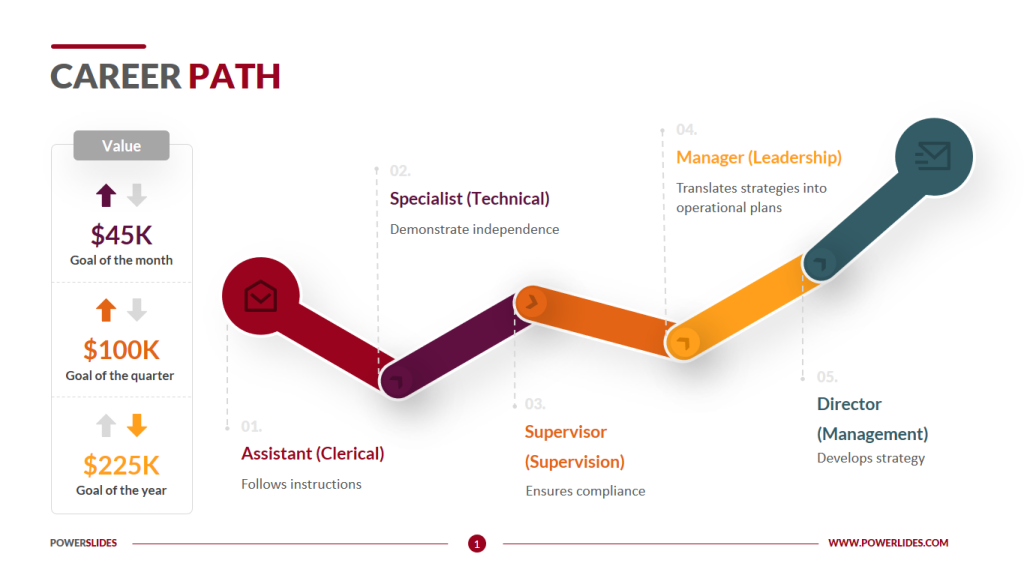
As AI reshapes the job market, traditional career paths are also evolving. The career path diagram you provided illustrates a progression from entry-level roles to strategic leadership. Let’s explore how this journey looks in the AI-driven world:
- Assistant (Clerical) Following Instructions. At the entry level, employees typically handle administrative or repetitive tasks. In the AI era, many such tasks are being automated by Robotic Process Automation (RPA) and AI assistants. However, individuals can remain valuable by developing digital literacy and learning how to work alongside these technologies using tools for scheduling, data input, or basic analytics.
- Specialist (Technical) Working Independently. Specialists are professionals with deep expertise in specific domains. Data scientists, prompt engineers, and machine learning engineers fall under this level. They work independently and build technical solutions powered by AI. This stage is in high demand and offers strong growth prospects, especially in industries rapidly adopting automation.
- Supervisor (Supervision) Ensuring Compliance. Supervisors monitor daily operations and ensure that processes run smoothly. With AI, they can use real-time dashboards, automated alerts, and performance analytics to assist their supervision. However, human decision-making is still critical to managing teams, resolving conflicts, and making judgment calls that machines cannot.
- Manager (Leadership) Translating Strategy to Action. Managers bridge the gap between strategic vision and operational execution. In the AI era, they rely on platforms like Google Analytics, Power BI, and Tableau to track KPIs and trends. To succeed, they must possess data literacy, critical thinking, and strong communication skills, enabling them to lead data-driven teams.
- Director (Management) Strategic Leadership. At the director level, professionals shape long-term organizational strategies. AI supports them with predictive analytics, scenario modeling, and market forecasting. But strategic leadership still requires a deep understanding of human values, ethics, and social context, which AI cannot replicate. Directors must ensure that tech advancements align with organizational goals and social responsibility.
AI Transforming Traditional Fields: Healthcare & Education
AI is also redefining traditional industries:
- Healthcare. AI supports radiologists in identifying anomalies in medical images, speeding up diagnosis and improving outcomes. Yet, human expertise remains essential in interpreting results and making treatment decisions.
- Education. Adaptive learning systems tailor content to each student’s pace and ability. While AI enhances personalization, it cannot replace the empathy and mentorship provided by teachers.
Essential Skills in the AI Era
To thrive in an AI-driven job market, workers need to reskill and upskill continuously. Below is a combination of technical and soft skills essential for future success:
Technical Skills
- Digital literacy
- Basic coding (e.g., Python, SQL)
- Data analysis and visualization
- Understanding of AI and machine learning basics
Soft Skills
- Problem-solving and critical thinking
- Collaboration and teamwork
- Emotional intelligence
- Self-learning and adaptability
Blending AI and Career Strategy
Rather than fearing AI, today’s workers should recognize it as a tool for empowerment. With the right mindset and learning attitude, anyone can adapt and even thrive in the AI age. You can start your career as an “Assistant” and grow into a “Director” by building competencies step by step. The career path image you provided shows that each stage requires a leap in skills. AI can support this leap by automating low-level tasks, providing learning opportunities, and amplifying decision-making, but you need to guide your journey with intention and curiosity.
- Human-AI Collaboration: Not Replacement, but Partnership

A more nuanced reality of AI in the workplace is that of collaboration, not just replacement. Instead of taking over every job, AI is increasingly augmenting human capabilities. For example, Journalists use AI tools to analyze data and identify trends before writing in-depth stories. Financial analysts use predictive models to forecast market behavior. Marketing professionals use AI to personalize customer journeys and analyze campaign performance. In these cases, AI handles the analytical, repetitive, or data-heavy aspects of the job, freeing up humans to focus on creativity, empathy, strategic thinking, and complex decision-making areas where machines still fall short. This evolution means the jobs of the future will likely be hybrid roles, combining technical skills with human-centered abilities.
- Thriving in the Age of Artificial Intelligence: Skills, Jobs, and the Future of Work
Artificial Intelligence (AI) is no longer a futuristic concept it’s shaping the world of work today. From streamlining business operations to revolutionizing entire industries, AI is drastically changing how jobs are performed, created, and eliminated. Understanding the profound implications of AI and preparing for its impact is essential for anyone aiming to stay relevant in tomorrow’s job market.
The Changing Nature of Work
AI has brought about a significant shift in the job landscape. Routine tasks such as data entry, basic customer service, and administrative duties are increasingly being automated using tools like chatbots, robotic process automation (RPA), and AI-powered virtual assistants. At the same time, complex systems are using AI to analyze vast datasets, predict outcomes, and even assist in decision-making. However, this technological shift is not solely about job displacement. While some traditional roles are becoming obsolete, AI is also creating entirely new job categories. Positions such as machine learning engineers, AI researchers, data scientists, and robotics experts are in high demand, and this trend will only intensify in the coming years.
Top AI Jobs in Demand
According to industry insights, the following five roles represent the most sought-after careers in the AI domain:
- Machine Learning Engineer. Responsible for building algorithms and predictive models that enable machines to learn from data and improve over time.
- Robotics Scientist. Designs and develops robotic systems that can perform complex, real-world tasks, often blending AI with physical hardware.
- Data Scientist. Extracts insights from large datasets using statistical techniques and machine learning, helping organizations make data-driven decisions.
- Research Scientist. Explores the frontiers of AI technology by developing new algorithms, architectures, and approaches to intelligent systems.
- Business Intelligence (BI) Developer. Uses AI tools to analyze business data and generate insights, helping companies understand trends and improve strategy.
These roles reflect how AI is being integrated across all sectors, from healthcare and finance to manufacturing and education.
Key Technical Skills for the AI-Driven World
To land a job in any AI-related field, individuals need a strong foundation in technical skills. Based on expert recommendations, the following skills are essential:
- Programming Expertise. Mastery in languages like Python, R, or Java is critical. Python, in particular, is widely used in machine learning and data science.
- Linear Algebra and Statistics. A solid understanding of mathematical principles enables professionals to build and analyze machine learning models.
- Signal Processing. Essential in areas such as natural language processing, audio analysis, and computer vision.
- Neural Network Architecture. Profound knowledge of deep learning architectures such as convolutional neural networks (CNNs), recurrent neural networks (RNNs), and transformers.
- Digital Literacy. The ability to navigate and use a variety of digital platforms and tools.
- Data Literacy. Skills in interpreting, cleaning, and analyzing data are foundational for all AI work.
- Understanding of AI Systems. Knowing how AI models work, their capabilities, and their limitations is crucial for applying them responsibly.
- Cybersecurity Awareness. As AI increasingly handles sensitive data, protecting these systems against threats is vital.
The Importance of Soft Skills
While technical skills are essential, soft skills are what differentiate top performers in an AI-enhanced workplace. These human-centered abilities are difficult for machines to replicate and will remain valuable in any industry:
- Critical Thinking and Problem Solving. AI can process data, but humans must interpret and make judgments on AI outputs. The ability to question, analyze, and improve AI-generated insights is key.
- Creativity and Innovation. Developing novel ideas, creating unique solutions, and innovating beyond what machines can replicate.
- Emotional Intelligence. Understanding and managing one’s own emotions and empathizing with others is critical in collaborative and leadership roles.
- Adaptability and Lifelong Learning. Technology evolves rapidly. Staying current through self-learning, courses, and certifications is necessary for long-term career success.
- Collaboration and Communication. AI systems still require human oversight and collaboration. Professionals must effectively communicate with both human teams and intelligent tools.
Reskilling and Upskilling for the Future
As AI continues to evolve, so must the workforce. Reskilling refers to learning new skills to move into a different role, while upskilling means enhancing current skills to adapt to new tools or job expectations. Organizations that prioritize workforce development—through mentorship, e-learning platforms, and upskilling programs—are more likely to retain talent and thrive in the digital economy. Governments and educational institutions also play a critical role in offering accessible training and encouraging STEM education from an early age.
Preparing Yourself for the AI Future
Here are actionable steps you can take to prepare for an AI-driven career landscape:
- Take Online Courses. Platforms like Coursera, edX, Udacity, and Data Camp offer courses on machine learning, deep learning, data science, and more.
- Build Projects. Practice what you learn by working on small AI projects—whether it’s building a chatbot, analyzing datasets, or experimenting with computer vision.
- Join a Community. Engage in online forums like Stack Overflow, Reddit, or AI-focused Discord groups. Collaboration fosters learning and opportunities.
- Earn Certifications. Industry-recognized certificates in AI or data science can boost your credibility and improve your resume.
- Stay Informed. Follow AI blogs, newsletters, and research publications to remain updated on the latest trends.
- Develop a Growth Mindset. Accept that change is constant. Embrace learning as a lifelong journey rather than a destination.
- Industries Most Impacted by AI
While AI is influencing nearly every sector, some industries are seeing more rapid and significant transformation:
- Healthcare: AI is used in diagnostics, drug development, and patient monitoring.
- Finance: Algorithmic trading, fraud detection, and customer service automation.
- Retail and E-commerce: Recommendation engines, demand forecasting, and inventory management.
- Manufacturing: Predictive maintenance, robotics, and quality control.
- Logistics and Transportation: Route optimization and autonomous delivery systems.
- Marketing and Advertising: Customer segmentation, behavioral analytics, and ad personalization.
Even sectors that rely heavily on human judgment, like law and education, are integrating AI to support rather than replace professionals.
- Ethical and Social Considerations
As AI becomes more embedded in daily work, ethical concerns are rising. Bias in algorithms, privacy issues, and the risk of over-reliance on AI systems can lead to unintended consequences. That’s why AI governance, transparency, and ethics are crucial. Employers must ensure their AI tools are fair, inclusive, and used responsibly. Likewise, workers must be educated on the ethical implications of the technologies they use or build.
Conclusion: Embracing the AI-Powered Future